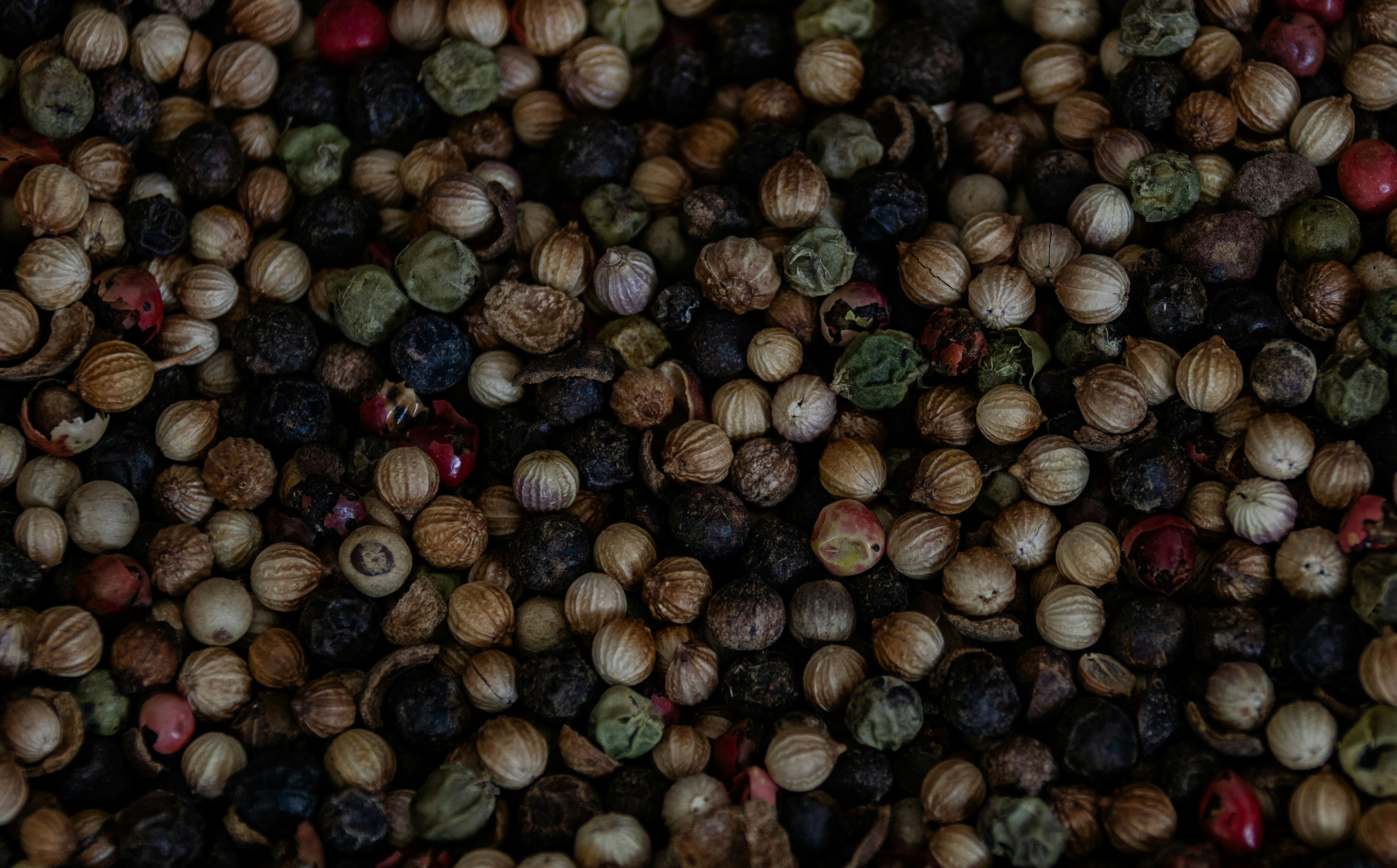
Sichuan pepper husks (not the seeds) contain the active alkylamides. Extract in 60-70% ethanol, cold maceration, 48-72 hours. The tingling compounds pull easily. Longer extraction starts dragging in woody, tannic notes from the seed fragments that add nothing useful.
The volatile fraction is rich in linalool, limonene, and hydroxy-beta-sanshool. These are the aromatic terpenes responsible for the citrusy, floral top notes that distinguish Sichuan pepper from simple numbness. Ultrasonic extraction at short durations (10-15 minutes) captures these volatiles well.
Two main species: Zanthoxylum bungeanum (red Sichuan pepper, more common) and Zanthoxylum armatum (green Sichuan pepper, sharper and more citrus-forward). Both contain sanshools but in different ratios. Green has a brighter, more electric tingle; red is warmer and more rounded.
Sichuan Pepper presents a distinctive sensory profile that reflects its unique compound composition.
Bright citrus, floral, with notes of lemon peel and pink pepper. Surprisingly fragrant for something known primarily as a numbing agent.
Not traditionally bitter or sweet. The primary sensation is trigeminal: a buzzing, tingling, numbing wave that builds across the tongue and lips. Faint citrus flavor underneath.
Unique in the botanical world. A persistent tingling vibration, measurably at ~50 Hz. Salivation increases. The numbing sensation builds with repeated exposure over 30-60 seconds.
Long. The tingling persists for several minutes after the initial dose. A slight cooling sensation follows as the numbness fades. The citrus aroma lingers in the retronasal pathway.
Sichuan Pepper finds its role in formulation through its primary compound contributions and how they interact with other ingredients.
Sichuan pepper tincture in a whiskey highball. The 50 Hz tingle transforms carbonation from a texture to an experience. The citrus volatiles bridge beautifully to lemon or yuzu.
Replace or augment Campari's bitterness with Sichuan pepper tincture. The alkylamides add a tactile dimension that traditional bitter compounds can't access.
The primary tingling compound. Activates TRPV1 and TRPA1 mechanoreceptors. Creates the signature 50 Hz vibratory sensation. Not a flavor compound; a touch compound.
Secondary alkylamide with a different receptor profile. Contributes to the numbing (as opposed to tingling) component. Works synergistically with alpha-sanshool.
Major volatile component at 15-25% of essential oil. The same compound found in lavender and coriander, but here it reads as bright citrus due to the surrounding aldehyde context.
Citrus terpene contributing to the lemon-peel aroma. Works with linalool to create the characteristically bright, clean top note.
Rose-scented monoterpene alcohol. Present in smaller quantities but contributes floral complexity to the aromatic profile.
Multiple structural variants exist in the husk. Each targets slightly different receptor subtypes, creating the complex, evolving tingling sensation rather than a single static feeling.
Gingerol and sanshool both activate TRPV1 receptors but through different mechanisms. Ginger brings heat; Sichuan pepper brings vibration. Together they create a trigeminal experience with both warmth and electric tingle.
Both are linalool-dominant botanicals, but context changes everything. Coriander's linalool reads as citrus-herbal; Sichuan pepper's reads as floral-bright. Blending them produces layered citrus complexity.
Wormwood provides classic bitterness; Sichuan pepper provides a non-bitter sensory impact. The combination adds a tactile dimension to amaro-style formulations without increasing actual bitterness.
Sichuan pepper doesn't add flavor in the traditional sense. It adds a physical frequency. Hydroxy-alpha-sanshool talks to your touch receptors, not your taste buds, creating a measurable 50 Hz vibration on the tongue. No other culinary ingredient operates in this channel. In formulation, it's the only tool that can add tactile complexity without adding bitterness, sweetness, or acidity. That's a category of one.